

Table of Contents
- What Makes a Good Break Cue
- Best Break Cue Options: Quick Comparison
-
Top Break Cues for Tournament Players
- Cuetec Cynergy Breach: Premium Carbon Fiber Power
- Spartan SPRBKCF: Limited Edition Carbon Fiber Design
- Bull Carbon INSANE: High-Impact G-Force Technology
- Cuetec AVID Surge: Glass-Fiber Bonded Performance
- PureX Carbon Fiber: Bakelite Tip Control
- Viking Valhalla Break-Jump Cue: Versatile Tournament Option
- Action APA Series and Koda Sports: Budget-Friendly Choices
- Break Cue Weight and Balance Considerations
- Break Cue vs. Playing Cue: Key Differences
- Jump-Break Cue Versatility and Tournament Rules
- Tournament Regulations and Standardized Testing
- Long-Term Durability and Cue Maintenance
- Frequently Asked Questions
Last Updated: October 7, 2026
What Makes a Good Break Cue
Among the best break cues, quality isn't just about being heavier or stiffer than a playing cue.
Tournament-level break cues focus on three core mechanics: stiffness, tip hardness, and balance point. Weight distribution matters too, a properly balanced break cue lets you generate power without fighting the equipment.

What separates average break cues from the best break cues is consistency. You need a cue that performs the same way on break shot 50 as it does on break shot one.
Best Break Cue Options: Quick Comparison
Cue Type |
Best For |
Key Advantage |
Price Range |
|---|---|---|---|
Carbon Fiber |
Tournament players seeking maximum power transfer |
Low deflection, consistent performance |
$475-$750 |
Glass-Fiber Bonded |
League players who want durability |
Familiar wood feel with modern reliability |
$385-$450 |
Solid Wood |
Budget-conscious players |
Affordable entry point |
$125-$350 |
Jump-Break Combo |
Versatile tournament players |
One cue for multiple shot types |
$225-$300 |
Carbon Fiber vs. Wood Shafts
Carbon fiber shafts deliver superior stiffness and minimal deflection compared to traditional wood. The trade-off is price, carbon fiber cues cost significantly more. But for tournament play, the consistency is worth it. Carbon fiber resists environmental changes like humidity and temperature fluctuations that can warp wood shafts over time.
Wood shafts, particularly hard rock maple, offer a familiar feel and solid performance at a lower price point. They work well for recreational and league play. For serious tournament competitors, though, carbon fiber's stability under high-impact conditions makes it the standard choice.
Phenolic Tip and Impact Force
The phenolic tip is engineered for maximum impact resistance. It's harder than leather, which means it transfers energy more efficiently and maintains its shape longer. Bakelite tips perform similarly, offering excellent durability and consistent power delivery.
When you strike the cue ball with a phenolic tip, the impact force concentrates directly into the ball rather than dissipating into the tip material. This concentrated energy is what creates the explosive break needed to scatter the rack effectively. The harder the tip, the more predictable the energy transfer, critical in tournament settings where consistency wins games.
Top Break Cues for Tournament Players
Cuetec Cynergy Breach: Premium Carbon Fiber Power
The Cuetec Cynergy Breach stands out for its 12.75mm carbon fiber composite shaft engineered specifically for efficient energy transfer with minimal deflection. This is the cue for players who demand professional-grade performance and are willing to invest in it.
The Power-Pro taper pairs with a Cuetec Kintrol composite break/jump tip and phenolic ferrule to deliver the kind of controlled power that wins tournaments.
The Acueweight system lets you fine-tune balance to your exact preference. Included joint protectors and cleaning wipes show this is built for serious players who maintain their equipment.
Understanding carbon fiber composite materials in sports equipment
Spartan SPRBKCF: Limited Edition Carbon Fiber Design
Spartan cues earned their reputation for solid build quality and clean styling. The SPRBKCF Limited Edition delivers on both fronts with a 29-inch carbon fiber shaft featuring radial symmetry construction and power break taper.

The 13mm Dr. V's Ti-TLiST V Pro break ferrule combined with carbon fiber construction creates a cue that handles the demands of league and tournament play.
This cue comes with a lifetime warranty and joint protector, Spartan stands behind their work. At $575.00, it's positioned between budget and premium options, making it accessible to serious players upgrading from entry-level equipment.
Bull Carbon INSANE: High-Impact G-Force Technology
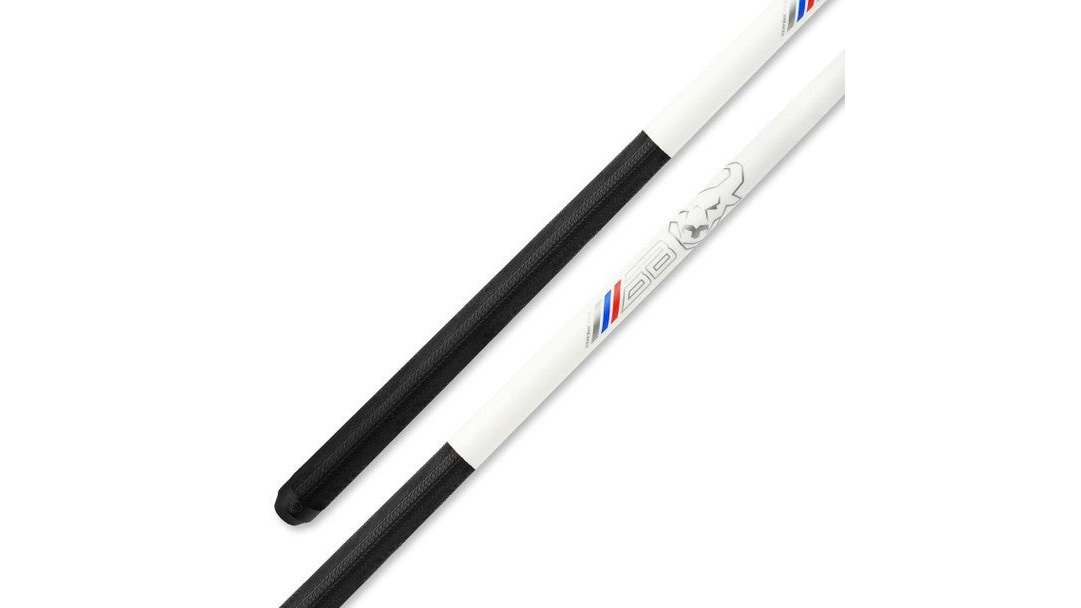
The Bull Carbon INSANE Break Cue features a 12.85mm white carbon fiber shaft paired with an advanced G-Force tip and durable Juma ferrule. The multi-zone sport wrap provides comfortable grip control even during extended tournament sessions.
Energy transfer is the focus here. The G-Force tip technology concentrates impact force directly into the cue ball, maximizing break effectiveness. Pearl white finish with matte UV coating protects against wear while maintaining aesthetic appeal.
Adjustable weight system allows customization for different playing styles. At $674.99, this cue competes directly with premium carbon fiber options by delivering specialized G-Force technology at a slightly lower price point.
Cuetec AVID Surge: Glass-Fiber Bonded Performance
Not every tournament player needs carbon fiber. The Cuetec AVID Surge Break Cue uses advanced glass-fiber bonded shaft technology to deliver explosive power with a familiar wood feel.
The Power+ phenolic tip with glass pad maximizes energy transfer specifically for breaking. Surge Power Pro Taper ensures stability and consistency.
Acueweight Generation II system lets you adjust balance. Black and gold finish gives it professional appearance.
PureX Carbon Fiber: Bakelite Tip Control
PureX Carbon Fiber Break Cue delivers maximum energy transfer through its 14mm bakelite tip paired with a carbon fiber shaft. Bakelite offers slightly different impact characteristics than phenolic, some players prefer the feel and feedback.

The tech wood butt provides stability and accuracy for consistent shots. Sport wrap handle ensures comfortable grip during play. Black bakelite ferrule is built for durability across hundreds of breaks. At $476.10, this cue sits in the mid-premium range, offering carbon fiber performance with bakelite tip specialization.
Viking Valhalla Break-Jump Cue: Versatile Tournament Option
The Viking Valhalla VA-BRK-H2 offers versatility that appeals to tournament players who need both break and jump capability.
High-quality North American hard rock maple construction ensures durability. Advanced high-impact ferrule and professional-grade leather tip deliver reliable performance. 5/16 x 18 joint allows custom configurations. Irish linen wrap and metal rings add professional appeal.
Lifetime warranty against manufacturing defects including warpage demonstrates Viking's confidence in build quality. At $225.00, this break-jump combo cue offers exceptional value for players who want one specialized cue instead of maintaining separate equipment.
Action APA Series and Koda Sports: Budget-Friendly Choices
The Action APA Series 22oz Break Cue ($206.10) and Koda Sports Xcel KS01-25 Heavy Hitter ($124.99) serve players entering tournament play or those managing equipment budgets. Both are officially licensed and built for league play.
Cuetec Cynergy Breach Break Cue 12.75mm Carbon Fiber Shaft Power Cue →
Action's 22 oz weight provides balanced power. Koda's 25 oz design emphasizes maximum force. Neither offers carbon fiber construction, but both deliver solid performance for recreational and early-competitive play. These cues let you develop your break technique without premium pricing.
Break Cue Weight and Balance Considerations
Break cue weight directly affects your stroke mechanics and break effectiveness. Heavier cues (24-25 oz) generate more force through mass, requiring a compact, controlled stroke.
Balance point, where the cue naturally balances when held horizontally, influences how the weight feels in your hands. A balance point closer to the tip makes the cue feel front-heavy, which some players prefer for power.
Tournament regulations typically allow cues between 18-26 oz. Test different weights during practice sessions to find what matches your natural stroke. The right weight should feel like an extension of your arm, not something you're fighting to control.
Break Cue vs. Playing Cue: Key Differences
A dedicated break cue differs fundamentally from your playing cue. Playing cues emphasize finesse, touch, and precision for position play.
Playing cues typically have softer tips (leather) that allow spin control and delicate touch. Break cues use harder tips (phenolic or bakelite) that resist deformation under high-impact force.
Shaft construction differs too. Playing cues often feature tapers optimized for control and feedback. Break cues use power tapers engineered to concentrate force at impact.
Most serious tournament players maintain both a dedicated break cue and a playing cue. The investment pays off through improved consistency and reduced wear on your primary cue.
Jump-Break Cue Versatility and Tournament Rules
Some players opt for combination jump-break cues that handle both shot types. The Viking Valhalla VA-BRK-H2 exemplifies this approach. A single versatile cue reduces equipment you need to maintain and carry.
Tournament rules permit jump-break combination cues. Check your specific league or tournament guidelines, but most organizations allow one cue designed for both purposes.
For tournament players, a combo cue works well as a backup or for players who jump frequently during matches. Serious competitors typically maintain separate equipment for optimal performance.
Tournament Regulations and Standardized Testing
Tournament play operates under standardized rules governing cue specifications. The Billiards Congress of America sets standards for tournament equipment. Cue weight, tip diameter, and joint specifications must meet official guidelines.
Most tournament-grade break cues comply with these standards. Tip diameter typically ranges from 12.75mm to 14mm. Weight falls between 18-26 oz. Joint types vary but must be secure and consistent.
Understanding these regulations matters when selecting a break cue for tournament play. Equipment that meets standardized testing ensures you can compete in sanctioned events without equipment violations.
Billiards Congress of America official rules and equipment standards
Long-Term Durability and Cue Maintenance
Carbon fiber shafts resist warping better than wood, making them ideal for tournament players who need consistent performance. Phenolic and bakelite tips maintain hardness longer than leather.
Regular maintenance extends break cue longevity. Clean the shaft and ferrule after each session. Check the tip for chips or cracks and have it resurfaced or replaced before tournament play.
Inspect the joint regularly for wear and ensure it maintains a tight fit. A loose joint compromises energy transfer and consistency.
At sibilliards, we stock break cues built for durability and tournament performance.
Selecting the right break cue transforms your tournament performance.
Frequently Asked Questions
What features should you look for in a tournament break cue?
Tournament break cues require low deflection for shot accuracy, a phenolic or hard composite tip for maximum energy transfer, stiffness in the shaft for consistent power delivery, and proper weight distribution (typically 19-25 oz). Carbon fiber shafts offer superior stiffness and energy dissipation compared to wood. Look for cues with quick-release joints for easy setup and adjustable weight systems to match your playing style. The ferrule should be durable, and the taper should support a compact, controlled stroke.
Is a dedicated break cue better than a playing cue with a break tip?
Dedicated break cues are significantly better for tournament play. They're engineered specifically for breaking, with optimized weight, stiffness, and tip hardness to maximize energy transfer and minimize deflection. Playing cues, even with hard tips, lack the structural design and balance needed for consistent break power. Professional tournament players use separate break cues to ensure reliability and performance on the opening shot, where precision and power are critical to controlling the table.
What weight break cue do most pros use?
Most professional tournament players use break cues weighing between 22-25 ounces. The 25 oz weight is popular because it delivers maximum kinetic energy to the cue ball while maintaining control. Some players prefer 22-23 oz for faster stroke mechanics. The ideal weight depends on your physical strength, stroke technique, and personal preference. Adjustable weight systems on premium cues allow you to fine-tune the balance to your exact specifications, which is why many tournament pros invest in high-end models with this feature.
Are jump-break cues allowed in pool tournaments?
Jump-break cues are allowed in most pool tournaments, but regulations vary by league and format. The Billiard Congress of America (BCA) permits jump cues in sanctioned play. Some tournaments may have specific rules about equipment, so check your event's rulebook before competition. Jump-break combination cues offer versatility, allowing you to execute both powerful breaks and jump shots with one cue. However, dedicated break cues often outperform combination models in raw breaking power and consistency.
How do carbon fiber shafts improve break performance?
Carbon fiber shafts deliver superior break performance through exceptional stiffness, which minimizes deflection and ensures the cue ball receives maximum energy transfer from your stroke. The material resists warping and maintains its structural integrity over time, providing consistent shot mechanics across thousands of breaks. Carbon fiber also absorbs and dissipates kinetic energy more efficiently than wood, reducing vibration and improving accuracy. Professional-grade carbon fiber break cues typically feature low-deflection technology and phenolic ferrules to optimize power and control during tournament play.


