


Quick Summary
Stop using the damaged pool cue right away, keep every piece and the packaging, and photograph the damage before you touch it. Then report the damage within the claim window in the retailer's policy and carrier rules.
- Stop using the cue and do not glue, sand or tape it back together yet.
- Keep every fragment, the box, padding and the shipping label.
- Photograph the box and each damaged area with a coin or ruler for scale.
- Report the damage within the claim window in your order confirmation and the carrier's policy.
- A cracked ferrule or split shaft can fail mid-stroke, so stop playing until it is repaired.
Table of Contents
- Check the Damage and Stop the Clock
- Triage the Damage: Shaft, Tip, Ferrule, Joint or Finish
- Photograph the Cue Shipping Damage Before You Touch It
- How to Report a Damaged Online Order Within the Deadline
- Writing a Damaged Item Customer Service Email That Gets Results
- Pool Cue Warranty Claims, Returns and Repair Options
- Repair or Replace: Choosing Your Next Step With sibilliards
- Frequently Asked Questions
Check the Damage and Stop the Clock
If a damaged pool cue arrives broken, cracked or otherwise damaged, the first 24 to 48 hours matter most. Carriers, retailers and warranty programs all set deadlines, and a missed one can cost you the claim.
Do not try to glue, sand or tape the damaged pool cue back together yet. A repair before the claim can make it harder to prove what happened in transit.
- Stop using the cue and do not play with it
- Keep every fragment, tip, ferrule piece and cap
- Keep the box, padding and shipping label
- Note the order date, delivery date and order number
Triage the Damage: Shaft, Tip, Ferrule, Joint or Finish
Not every type of damage calls for the same response. Sort the damage by part and by severity so you know whether to stop play, order a part, or file a claim. The table below adds the severity signal and the immediate action to take.
| Damaged Part | Common Symptom | Severity Signal | Immediate Action |
|---|---|---|---|
| Tip | Chipped, mushroomed, flattened or missing | Exposed ferrule or a tip that will not hold chalk | Stop play; order a replacement tip |
| Ferrule | Hairline crack, chip, split or wobble | Crack runs along the ferrule or the ferrule moves under thumb pressure | Stop play; do not sand; plan ferrule replacement |
| Shaft | Dent, ding, warp, crack or split | Crack runs with the grain, or the shaft will not roll flat on a table | Stop play; a split shaft can catch and cut your bridge hand |
| Joint | Loose pin, stripped threads, cracked collar | The cue rattles when screwed together or the joint will not tighten | Stop play; do not force the joint |
| Wrap | Loose linen, lifted leather, slick spot | Wrap moves under your hand or a seam lifts | Playable short-term; plan a rewrap |
| Butt | Cracked sleeve, chipped butt cap, bent bumper | Visible crack in the butt sleeve or a cap that will not stay on | Stop play; cosmetic until the crack reaches the joint |
| Finish | Scratches, dents, clouding or discoloration | Cosmetic only; no effect on roll or hit | Playable; repair when convenient |
Use three quick tests before you decide anything:
- The roll test. Roll the assembled cue on a flat table. A shaft that wobbles or hops has a warp or a bent joint pin, not just a cosmetic ding.
- The thumb test. Run your thumb along the ferrule and shaft. A crack you can feel with a fingernail is structural; a scratch you can only see is cosmetic.
- The tighten test. Screw the cue together gently. A rattle, a gritty feel, or a joint that stops short of flush points to joint damage, not tip damage.
A damaged tip or finish is usually a small repair. A cracked shaft or split joint is more serious and often means replacement. Choose your next step after you know which part failed and how severe the damage is.
Photograph the Cue Shipping Damage Before You Touch It
Photos are your strongest evidence. Take them before you handle the cue more than necessary, and capture the box as well as the cue.
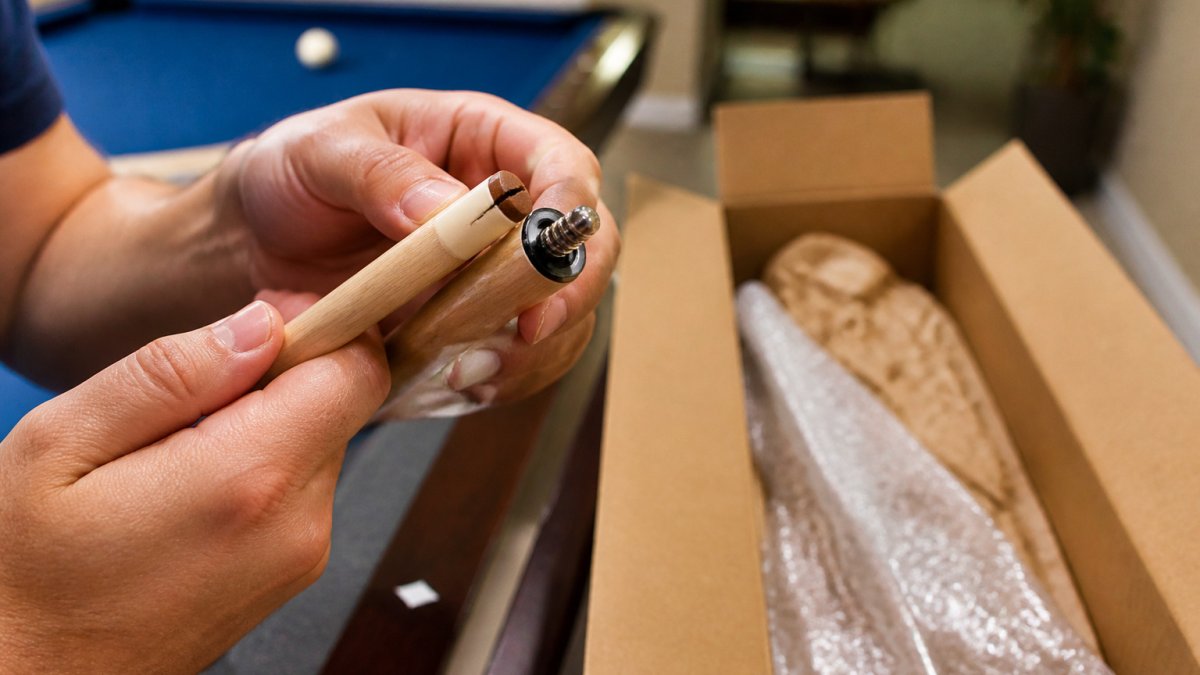
Take clear, well-lit photos of:
- The outside of the shipping box, including any crushing or tears
- The cue as it sits in the packaging
- Each damaged area, with a coin or ruler in frame for scale
- The full cue, so the damage shows in context
Record a short video of the unboxing if you can. A continuous clip is harder to dispute than still photos taken after handling.
How to Report a Damaged Online Order Within the Deadline
Report the damage as soon as you spot it. Retailers and carriers usually set a claim window, so check the deadline listed on your order confirmation and the carrier's policy.
Follow these steps:
- Check the order confirmation for the retailer's damage policy.
- Look up the carrier's claim window for damaged packages.
- Contact the retailer through its support channel with your order number.
- File a carrier claim if the retailer asks you to, or if the packaging was visibly damaged.
- Save every confirmation number and reply in one folder.
Watch out: some carriers require you to keep the damaged packaging until the claim closes. Throwing it away can void an otherwise valid claim.
Writing a Damaged Item Customer Service Email That Gets Results
A clear email gets faster answers than a long complaint. Include the facts, attach the evidence, and state what you want.
Use this template and fill in the blanks:
Subject: Damaged item, order [order number]
Hello,
My pool cue from order [order number], delivered on [date], arrived damaged. The [part name] is [describe the damage]. I have attached photos of the box and the cue.
Please let me know the next step for a replacement or repair. I can return the cue or send photos of any other part you need.
Thank you, [Your name] [Phone number]
Keep the tone calm and specific. Support staff move faster on emails that include an order number, a clear problem and proof.
Pool Cue Warranty Claims, Returns and Repair Options
Warranty coverage varies by manufacturer and by the type of damage. Warranties vary, so read the terms for what counts as a defect and what counts as misuse.
Before you file, read the warranty terms for:
- What counts as a defect and what counts as misuse
- How long the warranty lasts after purchase
- Whether the manufacturer requires proof of purchase
- Whether you must ship the cue back or can get a replacement part
Returns are a separate question. Ask the retailer which route applies, since return eligibility depends on its policy.
A tip replacement is a common DIY job, while a cracked shaft or ferrule may need a professional technician. Get a repair quote before you commit.
Repair or Replace: Choosing Your Next Step With sibilliards
Once the claim is filed, decide whether the cue is worth repairing or replacing. If you need a new shaft, you can shop for a carbon fiber replacement shaft in the size and joint type you need. Most guides stop at "it depends." Use the criteria below to make the call with numbers and measurements instead of guesswork.
Match the repair to the damage
- Tip only. A tip replacement is the cheapest and most common repair. It is a reasonable DIY job if you have a tip clamp, a sharp knife, sandpaper and a tip shaper. If you are not comfortable cutting near the ferrule, a technician can do it quickly.
- Ferrule. A cracked or chipped ferrule needs replacement, not glue. The ferrule must be cut off and a new one installed and faced square, which is a technician job on most cues.
- Shaft. A dent or ding can sometimes be raised with moisture and sanding, but a crack, split or warp usually means a new shaft. A replacement shaft is often the fastest path back to the table. For an alternative, you can browse a hybrid shaft with a compatible joint.
- Joint. A stripped pin or cracked collar is a structural repair. On production cues, a joint repair can approach the cost of a replacement shaft, so compare quotes before committing.
- Wrap and finish. These are cosmetic and can wait. A rewrap or refinish is worth it on a cue you plan to keep, but it rarely changes playability.
Apply the repair-versus-replacement test
Ask these questions in order: if the answer points to replacement, you can pick a performance carbon fiber shaft and choose the joint type that matches your cue.
- Is the damage limited to one replaceable part, like the tip or ferrule?
- Does the warranty or retailer cover the cost?
- Is the repair cost a small fraction of what a comparable replacement cue or shaft costs?
- Does the cue have sentimental value that a replacement cannot match?
- Would a repair leave the cue playing the way you expect, or would a bent pin or warped shaft still bother you?
If the damage is small and the repair is inexpensive, repair. If the shaft is cracked, the joint is compromised, or the repair quote approaches the price of a replacement, replacement is usually the safer choice.
Order the right part the first time
A mismatched part is the most common reason a repair order goes wrong. Before you order a replacement shaft, ferrule or tip, collect these measurements and photos:
- Joint type and thread. Note whether the joint is piloted or flat-faced, and the thread size (common sizes include 5/16-14, 5/16-18, 3/8-10 and 3/8-11).
- Shaft diameter at the joint. Measure with calipers; common sizes run from about 12.5 mm to 13 mm.
- Tip diameter. Measure the ferrule face so the new tip matches.
- Ferrule material and length. Note whether it is ivory-substitute, melamine, phenolic or another material, and its length.
- Cue brand and model. Include the model name or number from the butt cap or order confirmation.
Check the repair when it comes back
When the cue returns, inspect it before you play:
- Alignment. Roll the assembled cue on a flat table; the shaft should roll without a hop.
- Tip adhesion. The tip should sit flush on the ferrule with no gap or lip you can catch with a fingernail.
- Ferrule fit. The ferrule should be flush with the shaft with no step or wobble.
- Finish. Look for sanding marks, clouding or a joint that no longer sits flush.
Severe damage has limits. A shaft with a crack that runs into the joint, or a butt with a cracked sleeve, may never play the same after repair.
We recommend getting the claim resolved first, then choosing the repair or replacement that fits your playing style and budget. For current pricing, visit the sibilliards pricing page or request a quote.
Frequently Asked Questions
What should I do if my pool cue arrives damaged?
Stop before you assemble or play with it. Keep the box, packing material and cue together, and photograph the outer carton, the packaging, and each damaged area of the cue from several angles with a scale reference. Then contact the seller in writing within the return or damage-reporting window listed on the order confirmation. Do not attempt a repair before the seller has reviewed the damage, because a DIY fix can make a legitimate claim harder to approve.
Can I return a pool cue that arrived damaged?
Usually yes, if you report the damage promptly. Most retailers handle transit damage differently from buyer's remorse, so state clearly that the cue arrived damaged and attach your photos. Ask whether the seller will ship a replacement, issue a refund, or send the cue for repair, and confirm who covers return shipping before you send anything back. Keep the original packaging in case the carrier needs to inspect the shipment.
How long do I have to report damage to an online order?
The deadline is set by the seller's return and damage policy, not by a single universal rule, so check your order confirmation and the policy page before you do anything else. Report as soon as you notice the damage, and do not wait until you have tried to fix it. Early reports with clear photos are the easiest for a seller to approve, and they give the carrier the best chance to honor a transit damage claim as well.
What should I include in a message to customer service about a damaged cue?
Include your order number, the date of delivery, a plain description of each damaged area (for example, a cracked ferrule or a bent shaft), your photos, and what you want as a resolution: replacement, refund, or repair. Keep the tone factual and avoid speculating about how the damage happened. A short, specific message with the order number at the top is easier for a support agent to route than a long story.


