


Last Updated: October 28, 2026
Quick Summary
Pool cue tip selection means choosing hardness, diameter, shape, and material to match your stroke, your game, and your shaft. Start with a medium hardness tip, 12.75 mm to 13 mm diameter, and a nickel radius if you still miss the cue ball center on routine shots. Match the tip to your shaft within a fraction of a millimeter.
- Soft tips suit finesse play and heavy spin but mushroom faster and need more shaping.
- A narrow tip concentrates force on a small area, so off-center hits are more likely to slide off the ball.
- Most factory tips arrive close to nickel; shape gradually toward a dime rather than scraping in one pass.
- Trim mushrooming flush with a tip trimmer; it is normal on soft tips and not itself a reason to replace.
- Use a hard tip on a dedicated break and jump cue only, never on your playing cue.
Table of Contents
- How to Match a Pool Cue Tip to Your Playing Style
- Pool Cue Tip Hardness: Soft, Medium, and Hard Compared
- Pool Cue Tip Size: Diameter, Contact, and Miscue Risk
- Pool Cue Tip Shape: Dime vs Nickel Radius Explained
- Pool Cue Tip Replacement: Schedule, Signs, and Installation
- A Decision Tree for Beginners Through Advanced Players
- Upgrading Your Tip Setup at SI Billiards
- Frequently Asked Questions
How to Match a Pool Cue Tip to Your Playing Style
Pool cue tip selection starts with one question: what kind of player are you? The tip is your only contact point with the cue ball, every spin and every miscue runs through that small leather cap.
Pool cue tip selection means choosing hardness, diameter, shape, and material to match your stroke, your game, and your shaft. Get it right and the cue disappears in your hands; get it wrong and you fight it all night.
Below are four variables to consider and a decision tree you can use.
The Four Variables That Decide Everything
Every pool cue tip comes down to four specs, and changing one shifts the others.
- Hardness: how much the leather compresses at impact
- Diameter: the width of the tip face, usually 11 mm to 14 mm
- Shape: the curvature, measured as dime or nickel radius
- Material: single-layer leather versus layered construction
Pool Cue Tip Hardness: Soft, Medium, and Hard Compared
Here is how the three ranges compare in practice:
| Hardness | Feel | Best For | Trade-off |
|---|---|---|---|
| Soft | Spongy, grippy | Finesse play, heavy spin, beginners learning touch | Mushrooms faster, needs more shaping |
| Medium | Balanced | Most league and casual players | Nothing dramatic either way |
| Hard | Firm, crisp | Power shots, break and jump cues, players who hate maintenance | Less grip, punishes off-center contact |
What Hardness Does to Feel, Grip, and Spin
If you are weighing hardness options, a cue sold with a Le Pro tip gives you a real medium-hard reference point. The Players C-948 Obsidian Grey pool cue comes with a French Le Pro leather tip.

Billiards Congress of America equipment rules set the standards competitive play follows, and tip hardness is a player preference within those rules, not a regulated spec.
Pool Cue Tip Size: Diameter, Contact, and Miscue Risk
The miscue risk runs both ways. A narrow tip concentrates force on a small area, so a badly off-center hit is more likely to slide off the ball. A wide tip spreads that force and tolerates more error. Neither is "better." They reward different strokes.
Matching Tip Diameter to Shaft Diameter
The Bull Carbon OG 11.75mm carbon fiber shaft has an 11.75 mm tip diameter and a Kamui Black Soft tip.

The Bull Carbon OG 12.85mm shaft with Kamui Black Soft tip has a 12.85 mm tip diameter and a V-TEK interchangeable joint. The 11.75 mm shaft also has a V-TEK interchangeable joint.
Bull Carbon OG 12.85mm Carbon Fiber Pool Cue Shaft Kamui Black Soft Tip →

Pool Cue Tip Shape: Dime vs Nickel Radius Explained
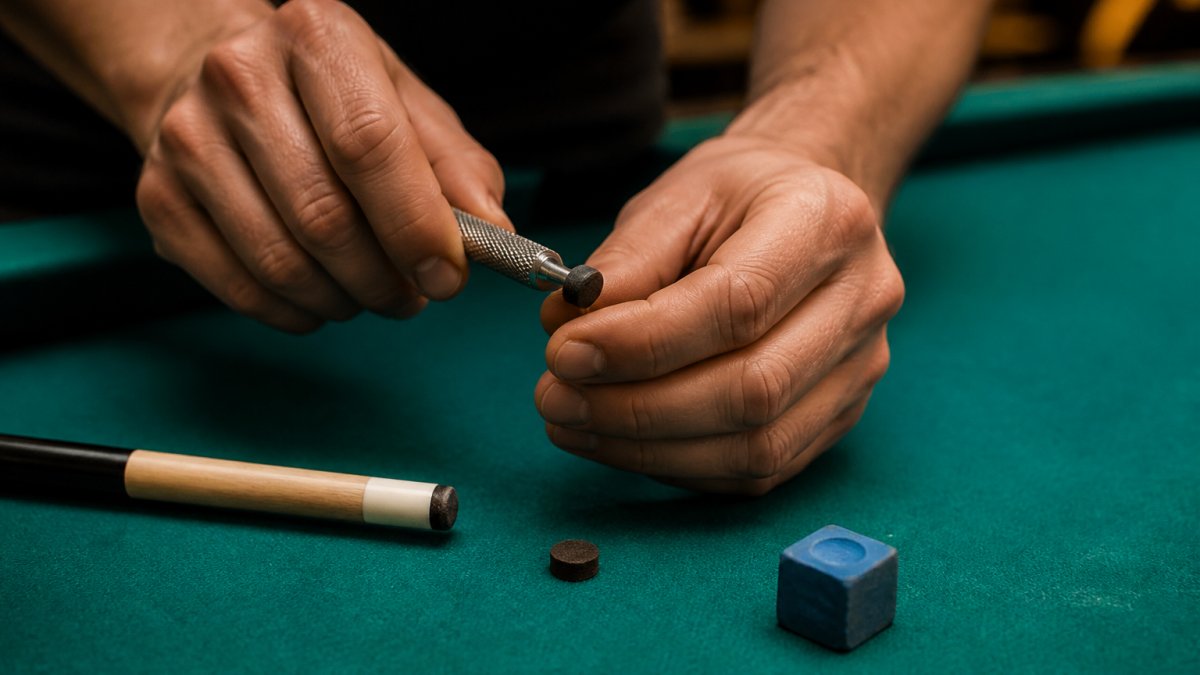
Most factory tips arrive close to nickel. If you want a dime, shape it gradually with a proper shaper rather than scraping it down in one pass, over-shaping removes leather you cannot put back, and a tip shaped too thin plays harder than its rating suggests.
Pool Cue Tip Replacement: Schedule, Signs, and Installation
There is no fixed replacement calendar, but there is a reliable protocol. Replacement depends on how often you play, how hard your tip is, and how well you maintain it, a soft tip on a daily player's cue may need attention far sooner than a hard tip on a weekend cue. What matters is distinguishing maintenance from replacement.
Maintenance versus replacement: the dividing line
- Glazing. The surface looks shiny and chalk stops sticking. Scuff the tip with a proper scuffer until the leather is matte again. If chalk sticks after scuffing, the tip is fine.
- Mushrooming. The leather has spread wider than the ferrule. Trim the overhang flush with a tip trimmer or have a repair shop do it. Mushrooming is normal on soft tips and is not by itself a reason to replace.
- Flattening. The crown has worn flat and no longer holds shape after scuffing. Reshape with a shaper to your preferred radius. If the tip will not hold the shape after a fresh shaping, the leather is worn through.
- Hard spots or a click on contact. This usually means the tip has separated from the ferrule or the leather has compacted unevenly. Replace the tip rather than trying to reshape around it.
Observable signs you can check in under a minute
- Chalk no longer sticks to the surface after a light scuff
- The tip edge overhangs the ferrule by more than a hairline
- The crown is flat across the middle rather than curved
- You can feel a hard spot or hear a click on contact
- The tip height above the ferrule looks visibly shorter than when it was installed
Installation: glue-on versus screw-on
If you are not confident with a blade near your ferrule, have a repair shop install it. A badly trimmed tip can damage the ferrule, and ferrule replacement costs more than the tip ever did. The same applies to carbon fiber shafts, where ferrule material and adhesive compatibility matter more than on maple.
A practical maintenance schedule
- After every session: wipe chalk dust off the tip and check that chalk still sticks.
- Every few weeks, or when chalk stops sticking: scuff lightly.
- Monthly, or when the crown flattens: reshape to your preferred radius.
- Whenever the edge overhangs the ferrule: trim flush.
- When shaping no longer holds a crown: replace.
American CueSports Alliance player resources cover league play standards, which is useful if you compete and want your equipment to stay within accepted norms.
A Decision Tree for Beginners Through Advanced Players
Work through the branches below in order. Stop at the first branch that describes you.
Branch 1: How consistent is your stroke right now?
- You still miss the cue ball center on routine shots. Start with a medium hardness tip, 12.75 mm to 13 mm diameter, and a nickel radius. The wider contact patch and flatter curve give you the largest margin for error while you build a repeatable stroke. Do not chase a soft tip for "more spin" yet, an inconsistent stroke turns extra grip into extra miscues.
- You can hit center reliably but your speed control wanders. Move to a medium or medium-soft tip at 12.5 mm to 12.85 mm with a nickel-to-dime shape. The slightly narrower tip sharpens feedback without shrinking the sweet spot enough to punish you.
- Your stroke is repeatable and you want finer position play. A soft or medium-soft tip at 11.75 mm to 12.5 mm with a dime radius is the common path. For cues built for finesse and control, see the best pool cue for finesse players. The tighter curve concentrates contact and rewards precise off-center hits.
Branch 2: What shots do you actually play most?
- Draw, follow, and heavy English dominate your game. Favor softer leather and a dime radius. Softer tips stay in contact longer, which helps generate spin at lower speeds. Pair it with a shaft diameter that matches the tip so the ferrule does not create a ledge.
- Straight shooting, power, and center-ball control dominate. Favor medium to medium-hard leather and a nickel radius. The flatter curve spreads contact and the firmer leather transmits energy cleanly on firm shots.
- You break and jump with a dedicated cue. Use a hard tip on that cue only. Break and jump tips are designed for impact and durability, not finesse, and putting one on your playing cue will cost you touch on soft shots.
Branch 3: What are you matching the tip to?
- A production shaft with a known diameter. Match the tip to the shaft within a fraction of a millimeter. A tip noticeably wider than the shaft mushrooms over the ferrule; a tip narrower than the shaft leaves a ledge that catches chalk unevenly.
- A carbon fiber or interchangeable-joint shaft. Confirm the tip is installed flush to the ferrule and that the joint system does not change how the tip seats. If you are buying a shaft with a tip already installed, verify the hardness and diameter rather than assuming the listing matches your preference.
- A cue you plan to keep for years. Choose a layered tip in the hardness range you settled on above. Layered construction holds shape longer than a single-layer tip of the same hardness, which means fewer shaping sessions and a more predictable feel over time.
Branch 4: What is your maintenance tolerance?
- You want to shape and scuff as little as possible. Lean harder within your chosen range. Hard tips deform less, mushroom more slowly, and hold their shape between sessions.
- You do not mind a monthly shaping routine. A softer tip is viable and gives you more grip and feel. Budget the time for scuffing and reshaping, and watch for mushrooming at the ferrule edge.
A quick cross-check before you commit
The 2026 buyer's guide to billiard pool cue sticks puts tip selection in context with weight, taper, and joint decisions.
Upgrading Your Tip Setup at SI Billiards
The Bull Carbon OG 11.75mm carbon fiber shaft is listed with a Kamui Black Soft tip, and the Players C-948 Obsidian Grey pool cue is listed with a French Le Pro leather tip.
Frequently Asked Questions
How do I choose the right pool cue tip?
Start with hardness, then size, then shape. A soft tip suits players who want maximum grip and spin on finesse shots, while a hard tip holds up to power and reduces maintenance. Match tip diameter to your shaft: 12.5 mm to 13 mm fits standard 13 mm shafts, while 11.75 mm to 12 mm suits narrower shafts. Finish with a nickel radius for all-around play or a dime radius for more aggressive English. If you are unsure, a medium hardness tip in a nickel radius is the safest starting point.
What is the best hardness for a pool cue tip?
There is no single best hardness, only the best fit for your stroke. Soft tips grip the cue ball longer, which helps with spin and delicate positional play, but they flatten and mushroom faster. Hard tips transfer power efficiently and hold their shape, which suits break shots and players with a firm, accurate stroke. Medium tips sit between the two and are the most common choice for league players. Try one hardness at a time and note how your draw and follow shots respond before switching.
Does pool cue tip size affect performance?
Yes. Tip diameter changes how much of the cue ball you contact and how forgiving off-center hits are. A larger tip, around 13 mm, offers a bigger contact patch and more margin for error, which helps beginners and power players. A smaller tip, around 11.75 mm to 12 mm, lets you strike closer to the edge for more English and precise cueing over balls, but miscues become more likely if your stroke wanders. Match the tip to your shaft diameter so the ferrule and tip sit flush.
How often should you replace a pool cue tip?
Replace a tip when it has worn down to roughly half its original thickness, when the side wall starts mushrooming over the ferrule, or when glazing and hardening stop it from holding chalk. For a league player practicing several times a week, that often means every six to twelve months. Clean and scuff the tip regularly between replacements to keep it gripping the cue ball. A worn tip costs you control long before it fails completely, so check it monthly.
Your tip is the one part of your cue you can change for a modest cost and feel immediately. Start with hardness and diameter, confirm your shaft compatibility, and stop guessing. Browse our cue and shaft collection at sibilliards, where every listing states the installed tip and diameter, and subscribe to our emails for fitting advice and new arrivals.


