


Table of Contents
- Why Responsive Order Support Matters When Buying Billiards Equipment
- Selection Criteria for Billiards Equipment Suppliers
- Professional Pool Cues: What to Look For Across Leading Brands
- Carbon Fiber Pool Shafts: Are They Worth the Investment?
- Billiards Accessories: Essential Add-Ons for a Complete Setup
- How Responsive Order Support Reduces Risk and Builds Confidence
- Common Mistakes to Avoid When Choosing a Multi-Brand Supplier
- Conclusion
- Frequently Asked Questions
Last Updated: October 19, 2026
Why Responsive Order Support Matters When Buying Billiards Equipment
Responsive order support is the difference between a cue that arrives ready to play and a purchase that stalls out in a warehouse queue. At sibilliards, we built our store around that idea: one location carrying a wide variety of industry-leading brands, backed by people who answer when something goes wrong. Serious players spend real money on professional-grade gear, and they expect the same accountability from their supplier that they bring to the table.
Here is what most guides get wrong. They rank suppliers on catalog size alone, as if a longer product list automatically means a better buying experience. It doesn't. A large catalog with slow, vague support is a liability, especially when you're ordering a carbon fiber shaft or a limited-edition cue that has to arrive straight and true.
Below, we break down the selection criteria that actually matter, how to compare brands across cues, shafts, and accessories, and the mistakes that cost players time and money.
Selection Criteria for Billiards Equipment Suppliers
The best supplier for billiards equipment is one that combines broad brand selection, authorized retail status, accurate product specifications, and fast, responsive order support in a single place. Those four factors matter more than any single discount or promotional offer.
Start with authorization. An authorized retailer buys directly from the manufacturer, which means warranty coverage applies and serial numbers check out. Counterfeit cues are a real problem in this market, and the easiest protection is buying from a dealer the brand publicly lists.
Then weigh these factors:
- Brand breadth: Can you compare Predator, Viking, Lucasi, Meucci, and Poison side by side, or do you need three separate orders?
- Spec accuracy: Are shaft deflection, tip diameter, and weight clearly stated, or buried in vague marketing copy?
- Support responsiveness: How fast does the supplier answer questions about stock, shipping, and damage claims?
- Stock status: Is the item actually in inventory, or is it a drop-ship order that ships weeks later?
- Return and damage policy: What happens if a cue arrives with a warped shaft or a cracked joint?
A supplier that scores well on all five removes most of the risk from an online purchase you can't physically inspect first.
Professional Pool Cues: What to Look For Across Leading Brands
Professional pool cues differ most in three areas: construction, joint type, and shaft technology. Understanding those differences lets you compare brands on equal footing instead of guessing from price tags.
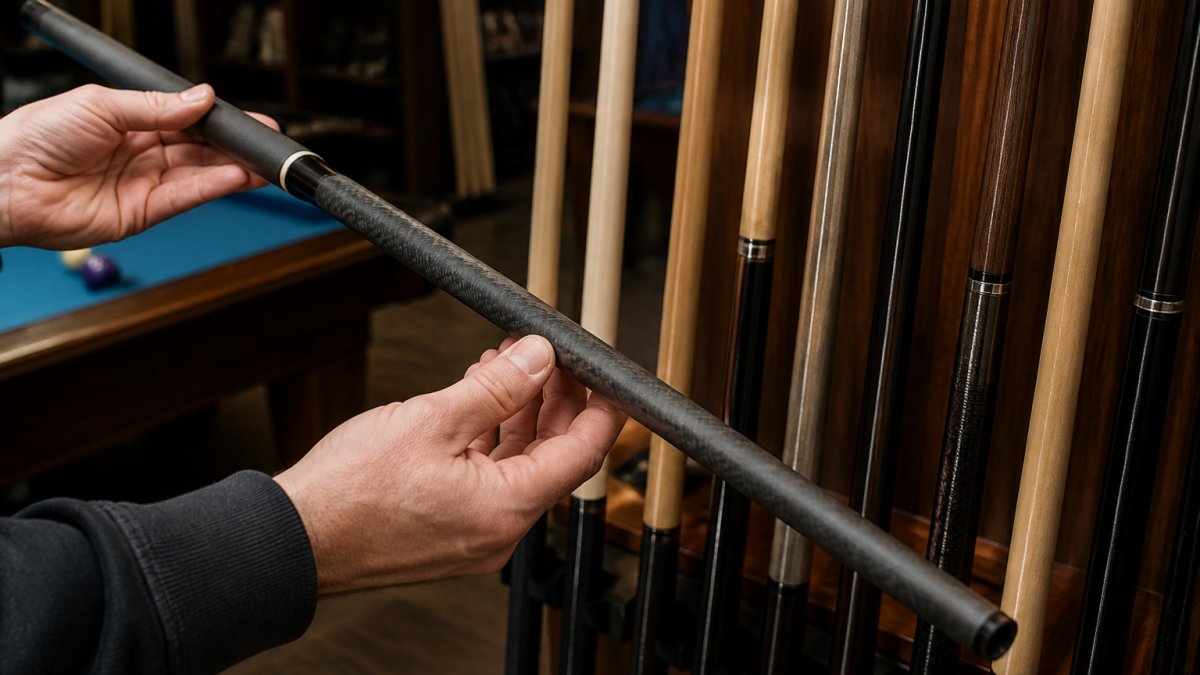
Construction splits into solid wood and multi-piece designs. Traditional maple cues from Meucci and Viking offer feel and feedback that many players prefer for finesse games. Production cues from Predator and Lucasi lean on engineered construction for consistency from cue to cue.
Joint types fall into a few common standards, including radial, 5/16x14, and Uni-Loc-style quick-release pins. The joint affects balance and hit feel, and matching it to your preferred shaft matters more than most buyers realize.
Shaft technology is where the biggest gap between brands sits. Traditional maple shafts and low-deflection laminated shafts play differently, and carbon fiber shafts play differently again. We cover that trade-off in the next section.
A common mistake is buying on brand name alone. A Predator and a Viking at similar price points can feel completely different in your hands. Read the specs, then match them to how you actually play.
Carbon Fiber Pool Shafts: Are They Worth the Investment?
Carbon fiber pool shafts are worth it for players who want low deflection, consistent feel, and durability that resists dings and warping. They are not automatically better for everyone, and the honest answer depends on your playing style and budget.
The case for carbon fiber comes down to three things:
- Low deflection: The shaft's front-end mass is engineered to reduce squirt, so off-center hits stay closer to your aim line.
- Consistency: Carbon fiber is manufactured to tight tolerances, so two shafts of the same model play nearly identically.
- Durability: The material resists moisture, dents, and the warping that can affect wood over time.
The case against is simpler: feel. Some players, particularly those raised on maple, find carbon fiber shafts transmit less feedback through the bridge hand. That's a preference, not a flaw.
Billiards Accessories: Essential Add-Ons for a Complete Setup
Billiards accessories are where most players under-buy. A great cue with a worn tip, no case, and a beat-up rack is a setup that will cost you games and money.
The essentials worth buying alongside your cue:
- A hard case: Protects the shaft from warping and the butt from dings during transport.
- Chalk and a tip tool: Regular tip maintenance keeps the hit consistent and extends tip life.
- A quality rack: A warped or loose rack produces inconsistent breaks, which costs you position.
- Shaft cleaner and a microfiber cloth: Keeps the shaft slick and prevents dirt buildup that changes feel.
- A cue rest or bridge: Useful for league players who face awkward shots under pressure.
Buying accessories from the same supplier as your cue pays off when something needs to be replaced. One point of contact for a warranty claim or a replacement tip is faster than juggling three vendors.
How Responsive Order Support Reduces Risk and Builds Confidence
Responsive order support reduces risk by resolving the three things that actually go wrong with an online equipment order: damaged shipments, spec mismatches, and stock delays. Fast, clear answers on those three fronts turn a risky purchase into a confident one.
Consider what a buyer actually worries about. A player dropping serious money on a cue they haven't held wants to know the retailer is legitimate, that the specs are accurate, and that a problem gets fixed without a fight. Support responsiveness answers all three before the order even ships.
The Federal Trade Commission's guidance on mail, internet, and telephone order merchandise sets expectations for how and when ordered goods must ship and what happens when they don't. A supplier that communicates proactively about delays is meeting a standard the law already requires, not doing you a favor.
Common Mistakes to Avoid When Choosing a Multi-Brand Supplier
The biggest mistake buyers make with multi-brand suppliers is assuming breadth equals quality. A store carrying dozens of brands can still be slow to answer a single email. Verify support responsiveness before you commit.
Other mistakes we see regularly:
- Not confirming authorized retailer status. Counterfeit cues exist, and warranty claims on gray-market gear get denied.
- Ignoring the return window. Ask how damage claims are handled and who pays return shipping before you order.
- Buying a limited-edition cue without confirming stock. If it's not physically in inventory, you may wait far longer than advertised.
- Skipping spec verification. Different sites list different deflection and tip specs for the same shaft. Cross-check against the manufacturer's own documentation.
- Chasing the lowest price. A slightly higher price with responsive support often costs less overall once a problem arises.
Conclusion
Buying professional billiards equipment online comes with real risk: counterfeit gear, inaccurate specs, and slow support that leaves you stuck mid-season. The fix is choosing a supplier that earns your confidence before the order ships.
At sibilliards, we carry a wide variety of industry-leading brands in one location, including Predator, Viking, Lucasi, Meucci, Poison, Pure X, Players, Bull Carbon, and Valhalla, as an authorized retailer. Our team provides responsive order support, accurate product specifications, and personalized guidance to help you match the right cue and shaft to your game. Subscribe to our emails for new arrivals, restock alerts, and equipment guidance from our team.
Frequently Asked Questions
Where can I buy billiards equipment from multiple leading brands?
Look for an authorized retailer that stocks several top brands under one roof, such as Predator, Viking, Lucasi, and Meucci. Buying from a single multi-brand supplier simplifies comparison and often means faster, more responsive order support. Check that the retailer is listed as an authorized dealer on each brand's website, and confirm they carry both playing and break cues, shafts, and accessories. A broad inventory in one location reduces shipping costs and delays.
What should I look for when choosing a billiards equipment supplier?
Prioritize authorized dealer status, clear product specifications, and responsive customer service. A good supplier will answer questions about shaft deflection, cue weight, and tip hardness before you buy. Check return policies and warranty support, and look for a company that stocks inventory rather than drop-shipping from manufacturers. Responsive order support means you can reach a person who knows the products and can resolve issues quickly.
Are carbon fiber pool shafts worth considering?
Carbon fiber pool shafts offer low deflection and consistent performance, making them popular among competitive players. They resist dents and warping better than wood and require less maintenance. However, they cost more and feel different on contact. If you are serious about improving your game and play regularly, a carbon fiber shaft from a reputable brand like Predator or Bull Carbon is a worthwhile investment. Try one in person if possible before buying.
What is the difference between a break cue and a playing cue?
A break cue is designed to transfer maximum energy to the rack, with a stiffer shaft and a hard tip, while a playing cue prioritizes control and feel with a softer tip and more balanced weight. Using a dedicated break cue preserves your playing cue's tip and ferrule. Many players carry both. When shopping, look for break cues with reinforced ferrules and tips made for high-impact hits, and playing cues with low-deflection shafts for accuracy.


